Generac Generator Installation Process
Turn-Key Generator Installation
What to Expect From Start to Finish
 Installing a home standby generator is one of the best ways to protect your home from power outages, but most homeowners don’t realize how many steps are involved.
At TriStar Electric, we handle the entire process from start to finish. This page walks you through exactly what to expect when you move forward with a Generac generator installation so there are no surprises along the way.
What “Turn-Key Installation” Really Means
When we say “turn-key,” we mean:
👉 You don’t have to coordinate multiple contractors
👉 You don’t have to deal with permits or inspections
👉 You don’t have to guess what’s needed
We take care of everything:
- System design and generator sizing
- Electrical and gas work
- Permits and inspections
- Installation and startup
- Ongoing service and support
Our goal is simple: make the process as smooth and stress-free as possible.
Step 1: Initial Consultation & Site Visit
Every project starts with a site visit.
This is where we:
- Look at your electrical system and panel setup
- Identify where the generator can be safely installed
- Review your gas availability (natural gas or propane)
- Talk through your goals (whole-home vs partial backup)
We’ll also answer questions like:
This step is about understanding your home and your expectations.
Step 2: System Design & Generator Sizing
Once we’ve seen your home, we design the system.
We don’t guess, we base this on:
- Your home’s electrical load
- Major appliances (HVAC, water heater, range, etc.)
- How much of the home you want backed up
In many cases, we also design around:
- Load management systems (to prevent overload)
- Multiple panels or complex layouts
- Future needs (additions, EV chargers, etc.)
The goal is to give you a system that works reliably, not one that’s undersized or unnecessarily oversized.
Step 3: Proposal & Scope of Work
After the design is complete, we provide a detailed proposal.
This includes:
- Generator size and model
- Scope of work
- Installation details
- Total project cost
We take time to walk through it with you so you understand:
- What you’re getting
- How the system will work
- What the installation involves
No hidden steps, everything is clearly laid out.
Step 4: Permits & Planning
Once approved, we begin the behind-the-scenes work.
We handle:
- Electrical permits
- Gas permits
- County requirements
- Inspection scheduling
If needed, we also coordinate with:
- Gas companies
- Propane providers
This part takes time, but it ensures everything is done correctly and passes inspection.
Step 5: Installation and What Actually Happens On Site
This is where the physical work begins.
Generator Placement & Pad
- We clear and level the ground to install a concrete or timber framed pad
- Set the generator in the proper location
- Ensure all required clearances are met
Electrical Work
- Install the automatic transfer switch (ATS)
- Connect the generator to your electrical system
- Modify and/or upgrade panels if needed
- Complete grounding and bonding
Gas Installation
- Run gas lines
- Size piping correctly for the generator
- Install propane tanks if required
Trenching & Site Work
- Trench for electrical and gas lines
- Backfill and restore the area
Most installations take 3-5 days of on-site work, depending on complexity.
Step 6: System Startup & Testing
Once everything is installed, we fully test the system.
We:
- Start the generator
- Simulate a power outage
- Verify automatic transfer operation
- Check electrical loads and performance
We also:
- Register your generator with Generac
- Activate your warranty
- Set up Mobile Link monitoring (if included)
We don’t leave until the system is working exactly as it should.
Step 7: Walkthrough & Education
Before we wrap up, we walk you through everything.
We explain:
- How the generator operates
- What happens during an outage
- What normal operation looks like
- When to call for service
You’ll feel confident using your system before we leave.
Step 8: Final Inspections
We schedule final inspections for the gas permit and electrical permit.
Once those have passed inspection, and everything is closed out with the county, the project will be complete.
Step 9: Ongoing Maintenance & Support
A generator is not a “set it and forget it” system.
To keep it reliable, it needs:
- Routine maintenance (2 times per year)
- Battery checks
- Oil and filter changes
- System diagnostics
We provide:
- Maintenance plans
- Repair services
- Warranty support
- Emergency service
We stay involved long after installation to make sure your system is always ready.
What Makes TriStar Electric Different
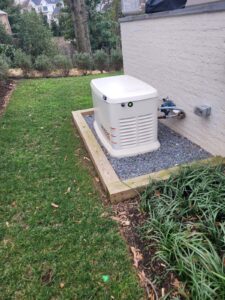 There are a lot of companies that install generators, but not all installations are the same.
At TriStar Electric:
- We design systems based on real load calculations
- We install clean, organized, professional systems
- We plan for long-term reliability
- We handle everything in-house
Most importantly:
We make sure your generator works when you actually need it.
What Does a Generator Installation Cost?
Most homeowners invest:
- Around $17,000+ to get started
- Typically $20,000 – $25,000 for full installations
- $25,000 – $30,000+ with propane systems
- Larger homes can reach $30,000 – $60,000+
Cost depends on:
- Generator size
- Gas installation
- Electrical complexity
- Site conditions
Where We Install Generators
We provide turn-key generator installation throughout:
- Maryland
- Washington DC
- Northern Virginia
Ready to Get Started?
Installing a generator is a big decision, but it doesn’t have to be a complicated one.
We’ll walk you through every step and handle the entire process for you.
Request a Free Quote
Call 410-799-5791
Schedule a Site Visit